
关键词 > LIN101
LIN101 Linguistic Articulators and Consonants Homework #2
发布时间:2025-09-26
Hello, dear friend, you can consult us at any time if you have any questions, add WeChat: daixieit
LIN101
Linguistic Articulators and Consonants
Homework #2
Please type your answers into afresh new document, with the problems clearly labelled and separated, so they are easy to grade. Do not try to cram your answers into the original homework PDF. You do not need to copy the original question into your response; just label each problem.
Problem 1. I gave ChatGPT the prompt “Draw and label a midsagittal diagram of the human vocal tract. The diagram should contain all the parts necessary for a typical introductory course in linguis- tics.” This is the image that ChatGPT produced:
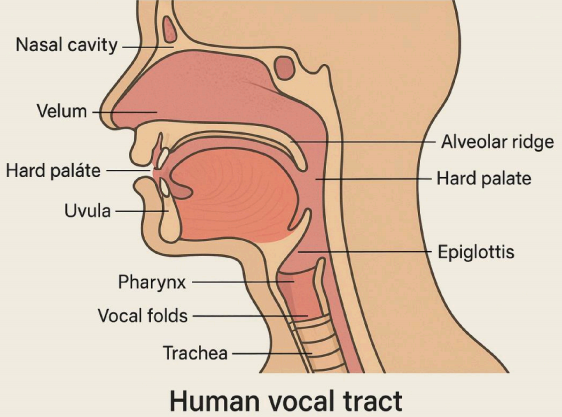
a. For each of the ten labels in ChatGPT’s image, state whether the label is correct or not, and if it is incorrect, briefly explain everything wrong with it (terminology, spelling, pointing to the wrong body part, pointing to a missing body part, etc.). [5 marks]
b. List all of the labels that are missing that you would have expected to see in a midsagittal diagram for it to be useful for studying the vocal tract in this course. [1 mark]
c. Draw and label your own version of a fully correct midsagittal diagram on paper by hand. Make sure the labels are legible! The drawing doesn’t need to be perfect, just accurate. Then take a picture of your drawing with a phone and include that picture as your response to this part ofthe assignment. Keep track of how long it takes you to draw the diagram. [2 marks]
d. Use your favourite generative LLM tool (ChatGPT, Copilot, Firefly, etc.) and try to construct a correct image matching the one you drew in 1c. Use as much clever iterative prompt engineering as you can until you either get a fully correct result similar to the one you drew by hand, or until you give up because it does not work. Include all of your prompts as part of your response, as well as one or more images that represent your process. At minimum, you should include either the version you like best or the version at the point you gave up. Keep track of how long it takes you to create a satisfactory image (or how long until you gave up) and briefly describe the overall process, including your reasoning for giving up if you did so. You may instead opt out of using LLMs due to ethical considerations. If you do opt out, state so explicitly and briefly discuss your reasoning. [2 marks]
e. If you used an LLM for 1d, compare your experiences between the methods in 1c and 1d, taking into consideration how long each method took, how easy each method was, which method produced the best output, and which method you would trust. For example, if you needed emergency surgery, would you prefer that your surgeon had studied anatomy in medical school with LLMs or with their own brain? [2 marks]
If you opted out of using LLMs for 1d due to ethical considerations, discuss what contexts, if any, you might find the use of generative LLMs to be acceptable. [2 marks]
Problem 2. Take a consensual picture of a live human arm. No corpses, please! The arm can be yours, a family member’s, or a friend’s. Do not sneak a picture of a stranger’s arm! Clearly label the picture with the locations ofthe six joints used for manual articulation in signed languages. No discussion necessary, just include the labelled image. [3 marks]
Problem 3. For each of the following signs for TEN from five different signed languages, list which one single joint is most obviously used for manual movement during the sign, and list which type of movement (flexion, extension, abduction, adduction, or rotation) it has. Do not count any initial or final movements required to get the articulators into and out of position, just the main movement that occurs during the core part of the sign. If the movement occurs in multiple directions (for example, flexion and extension), be sure to list both. There is only one main type of movement in each sign, so if the main movement is flexion/extension, you can ignore small amounts of abduction/adduction and rotation. [5 marks]
a. https://media.spreadthesign.com/video/mp4/13/51497.mp4 (American Sign Language)
b. https://media.spreadthesign.com/video/mp4/6/6429.mp4 (Portuguese Sign Language, Língua gestual portuguesa)
c. https://media.spreadthesign.com/video/mp4/55/585396.mp4 (Cypriot Sign Language, Κυπριακή Νοηματική Γλώσσα)
d. https://media.spreadthesign.com/video/mp4/42/414191.mp4 (Croatian Sign Language, Hrvatski znakovni jezik)
e. https://media.spreadthesign.com/video/mp4/49/606459.mp4 (Danish Sign Language, Dansk tegnsprog)