ECON20120/30320 Mathematical Economics I EXAM 2025/26 (term 1)
Hello, dear friend, you can consult us at any time if you have any questions, add WeChat: daixieit
ECON20120/30320
Mathematical Economics I
EXAM 2025/26 (term 1)
Instructions
Your solution has to be uploaded to Canvas as one single PDF doc- ument. Your answer has to be typed (not hand-written!). If you would like to add figure or graphs, you are permitted to draw these by hand and paste into your answer.
You should carefully explain the reasoning behind your answers and calculations. Be advised that the examiners attach considerable im- portance to the clarity with which answers are expressed. Show all the steps of your argument or calculation in your answer.
Answer EITHER Part A OR Part B but not both. Part A contains 1 question which is worth 100%. Part B contains 4 questions of which you have to answer 3. All questions in Part B carry equal marks. For Part B the first 3 questions in your submission will be marked. If you submit solutions to all 4 questions, the last one on your submission will not be looked at.
PART A
Question (100%)
Design an exam question for Mathematical Economics I that cannot be solved by ChatGPT (or any of its competitors).
You will have to:
- design a question for a final take-home, open-book exam
- provide a detailed solution (also called ‘answer key’)
- present ChatGPT’s (failed) attempt in answering the question you designed.
Notes: (1) You cannot use this question or any of the ones below as your answer! (2) You cannot withhold relevant information from ChatGPT, e..g, ‘ . . . using the approach discussed in the week 3 lecture, solve ... ’.
PART B
Answer three questions. All questions carry equal marks.
Question 1
Consider the choice space {1, 2, 3, 4} with 4 elements. How many different preferences can be defined on this choice space?
Your answer has to be written in a structured way, i.e., explain how these different preferences can be derived without simply writing each and everyone of these down.
Explain briefly how many preferences remain if 1 ≤ 4 has to hold.
[HINT: Do not believe everything you find on the internet or Chat- GPT’s hallucinations!]
Question 2
Consider the relationship x ≤ y if and only if x2 ≤ 2y2 .
(a) Is this relationship a preference on the choice space X =]−∞ , ∞[? Show details of your answer.
(b) Find choice space(s) of the form [a, b] such that ≤ is a preference relationship.
(c) Find a countable (infinite!) choice space of the form {xn | n ∈ N} such that ≤ is a preference relationship.
Question 3
Your classmate presents an equilibrium model

where c is a strictly convex function, k, b and α are real-valued variables, and pL(*)B, pc are prices.
Unfortunately your classmate’s mathematical economics skills are quite rusty. They ask you to check whether the following two results are correct or if there is a mistake. They are also not sure if fur- ther conditions are needed on the function c or any of the variables or prices. Apply only tools you learned on ECON20120/30320 and show all details of your answer.
Result 1:
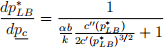
Result 2:

Question 4
Consider the “mistrust” minimization problem

where S : Rn → [0, ∞[ is a function, p1 , ..., pn are the prices of activities (per unit) and w is the budget. Real-world background story: By carrying out joint activities, trust between two people can increase and, thus, mistrust is reduced. The function S gives scores to a set of activities based on which and how often these are carried out.
(a) Prove that the function M (p, w) : Rn+ → R is quasi-concave.
(b) Can you give conditions such that M (p, w) is strictly quasi- concave?
Hints:
1. The subscript “+” means that all elements of a vector are non- negative and at least one element is strictly larger than zero.
2. Think hard what quasi-concave means in this particular case.
2026-01-21