Econ 11 Microeconomic Final Exam Review
Hello, dear friend, you can consult us at any time if you have any questions, add WeChat: daixieit
Econ 11
Final Review
Assume that there are N firms in the market for x that each have cost function 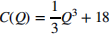 and 10 consumers with an income of 243 each and identical utility functions
Question 1
If N = 40 and the market price were 16, then
A) Market supply would be greater than market demand, so the equilibrium price will be less than 16
B) Market supply would be greater than market demand, so the equilibrium price will be greater than 16
C) Market supply would be less than market demand, so the equilibrium price will be less than 16
D) Market supply would be less than market demand, so the equilibrium price will be greater than 16
E) Market supply would equal market demand, so the equilibrium price is 16
Question 2
If N = 40, what is the equilibrium price (round to the nearest tenth)?
A) 8.3
B) 38.6
C) 11.8
D) 16
E) None of these
Question 3
What would N be in the long run equilibrium?
A) 120
B) 60
C) 10
D) 20
E) None of these
Assume that there are two consumers in an economy that have utility functions

The two consumers begin with equal endowments of the two goods

Question 4
If the price of x and y were both set to 1, there would be
A) Excess demand for x so the equilibrium price ratio must be less than 1
B) Excess supply of x so the equilibrium price ratio must be less than 1
C) Excess demand for y so the equilibrium price ratio must be greater than 1
D) Excess supply of y so the equilibrium price ratio must be greater than 1
E) No excess supply or demand for either good, so the equilibrium price ratio is 1
Question 5
What is the equilibrium price ratio?
A) 2/3
B) 5/2
C) 3/5
D) 1
E) None of these
Question 6
Consumer A increases their endowment of both goods to 100  This will cause
A) No change in the equilibrium price ratio
B) The equilibrium price ratio to increase, causing consumer B to decrease their consumption of x
C) The equilibrium price ratio to increase, causing consumer B to increase their consumption of x
D) The equilibrium price ratio to decrease, causing consumer B to increase their consumption of x
E) The equilibrium price ratio to decrease, causing consumer B to decrease their consumption of x
Assume a single firm produces two goods, x and y, with production functions

And a single consumer with utility function

Assume that there is enough labor for the firm to hire 512 hours
Question 7
If the price ratio is px /py = 1, there will be
A) An excess demand for x so the equilibrium price ratio must be less than 1
B) An excess supply of x so the equilibrium price ratio must be less than 1
C) An excess demand for y so the equilibrium price ratio must be greater than 1
D) An excess supply of y so the equilibrium price ratio must be greater than 1
E) No excess supply or demand for either good, so the equilibrium price ratio is 1
Question 8
What is the equilibrium price ratio?
A) 1/3
B) 3/2
C) 1
D) 3
E) None of these
Question 9
The consumer's demand changes to . This will cause
A) The equilibrium price ratio to increase and the quantity of x relative to y to rise
B) The equilibrium price ratio to increase and the quantity of x relative to y to fall
C) The equilibrium price ratio to decrease and the quantity of x relative to y to rise
D) The equilibrium price ratio to decrease and the quantity of x relative to y to fall
E) None of these
Question 10
The production function for good y changes to . This will cause
A) The equilibrium price ratio to increase and the quantity of x relative to y to rise
B) The equilibrium price ratio to increase and the quantity of x relative to y to fall
C) The equilibrium price ratio to decrease and the quantity of x relative to y to rise
D) The equilibrium price ratio to decrease and the quantity of x relative to y to fall
E) None of these
2025-12-13
Microeconomic theory