Money and Banking Midterm Exam Spring 2016
Hello, dear friend, you can consult us at any time if you have any questions, add WeChat: daixieit
Money and Banking
Spring 2016
Midterm Exam
Question 1 [18 points]
Consider an economy with three dates (T=0, 1, 2) and the following investment opportunity. If an agent invests $1 in a project at T=0, the project yields $2 at T=2. The project can be liquidated at T=1 but early liquidation yields $1 at T=1.
An agent has $1 and can be of two types. With probability 0.5 the agent is a type-1 consumer and with probability 0.5 the agent is a type-2 consumer.
If an agent is a type1-consumer, he only values consumption at T=1 and his utility function is

where c1 is the amount consumed at T=1. If an agent is a type-2 consumer, he values consumption at both T=1 and T=2 according to the utility function
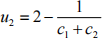
where c1 and c2 are the amounts consumed at T=1 and T=2, respectively.
a) What is the expected utility of the agent? [3 Points]
Now consider a bank that invests in these projects. There are N=1000 agents. All agents are identical ex ante in the above sense. Suppose they all deposit $1 each with the bank. The bank offers the following demand deposit contract (d1, d2) where d1 is the amount and agent can withdraw at T=1 and d2 is the amount he can withdraw at T=2.
b) Suppose d1=1.25. What is the amount d2 that the bank can offer an agent who withdraws at T=2? What is the expected utility of an agent? [3 Points]
For all subsequent questions, suppose the bank offers the deposit contract (d1, d2)=(1.25, 1.5).
c) A type-2 consumer expects that 680 agents will withdraw at T=1.What is the best
response of the type-2 consumer, i.e. does he has an incentive to run to the bank and withdraw at T=1? [4 Points]
Suppose the government wants to provide deposit insurance or suspend convertibility of demand deposit into cash if too many agents are withdrawing.
d) What is the maximum number of withdrawals at T=1 that the government can allow for so as to prevent a type-2 consumer from withdrawing at T=1? [6 Points]
e) What is the minimum amount of deposit insurance that the government needs to provide so as to prevent a type-2 consumer from withdrawing at T=1? [2 Points]
Consider the following bond market. It is common knowledge that the bond pays off either $60 or $100 at t=1. Both states are equally likely.
Agent S owns the bond. Since he needs cash at t=0 he is willing to sell the bond at a $10 discount. It means if the true value of the bond is $60 agent S is willing to sell for (at least) $50. If the true value of the bond is $100 agent S is willing to sell for (at least) $90.
Agent B is interested in buying the bond. If the true value of the bond is $60 (or $100) agent B is willing to buy for (at most) $60 (or $100).
The seller (agent S) proposes a price to sell the bond. Both agents are risk neutral and maximize expected utility.
a) What price does the seller offer in equilibrium? Is there trade? [2 Points]
Now suppose agent B is a sophisticated buyer. After seeing the price offer of the seller, the buyer can try to learn something about the bond. If agent B spends Y =$4 on information acquisition, he can find out the true value of the bond.
b) Suppose the seller offers a price p=$80. What is the best response of the buyer?
Should the seller offer this price? [3 Points]
c) Is there any price at which both agent S is willing to sell and agent B is willing to buy? If so, what price does the seller offer? [8 Points]
Now suppose there is a rating agency in the above bond market which evaluates the bond. The rating agency announces that there is a probability q that the payoff of the bond is $100.
d) Suppose q=0.95 (i.e. there is 95% that x=100). Is there trade in equilibrium? If so what is the price the seller is offering? [3 Points]
e) Determine the minimum q between [0.5, 1] such that the buyer has no incentive to acquire information and there is trade in equilibrium. [6 Points]
Consider the following economy with three dates (t=0, 1, 2). A firm needs to raise $100 to finance a project at t=0. At t=2, the project can be a failure and pays off nothing or a success which generates $400. The probability of failure is 0.2 and the probability of success is 0.8.
There is an early consumer who has $100 at t=0 and the utility function

There is a late consumer who has $300 at t=1 and the utility function uL = cL0 + cL1 + cL2 .
Suppose the firm issues equity at t=0. At t=1, the equity market reveals whether the project is a success or failure.
a) What equity contract does the firm offer the early consumer so as to get $100? [4 Points]
b) What is the expected profit of the firm? [1 Points]
Now suppose the firm seeks bank finance. The bank provides loans to firms and keeps information secret. At t=2 the bank is liquidated and consumers who have deposits with the bank get back what the bank owns at t=2.
The bank offers the early consumer the following demand deposit contract. If the early consumer deposits $100 at t=0, he can withdraw $100 at t=1.
c) What loan contract does the firm offer the bank so as to get $100 from the bank? [4 Points]
d) What is the expected profit of the firm? [1 Points]
Free banks in the Free Banking Era issued banknotes. Similarly, national banks in the National Banking Era issued banknotes.
a) What did free banks use to back their banknotes? [2 Points]
b) What happened during a bank run in the Free Banking Era and what was the main reason for bank runs? [4 Points]
c) What happened during a bank run in the National Banking Era? How was it different from a bank run in the Free Banking Era and what were the reasons for the differences? [6 Points]
After the experiences in the Free and National Banking Eras, and in particular, the Great Depression, the banking industry was highly regulated up to 1980s.
d) What were the main regulations that bank holding companies were facing in that period? [4 Points]
In the late 1980s deregulations ofthe banking industry set in. This led to many bank mergers and an industry consolidation.
e) What triggered deregulations and the change in banking? [4 Points]
2025-08-15