IMAGES – Geometric Optics Practise Problems
Hello, dear friend, you can consult us at any time if you have any questions, add WeChat: daixieit
PHYSICS
IMAGES - Geometric Optics Practise Problems
UNSW College Foundation Studies
Additional Geometric Optics Problems
(and selected past exam questions)
Curved MIRRORS
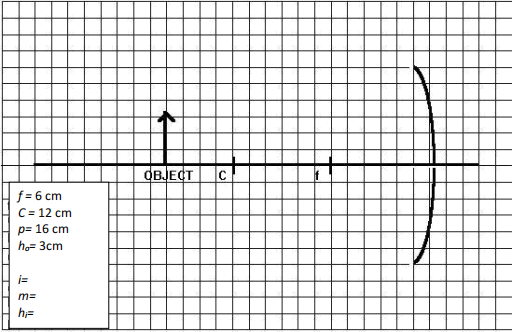
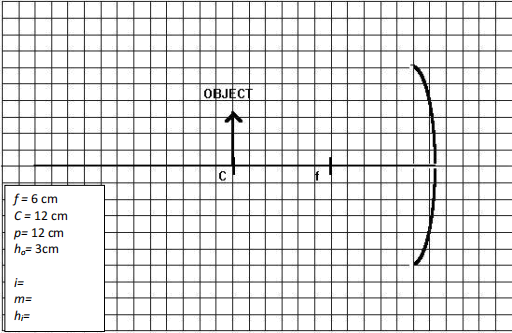
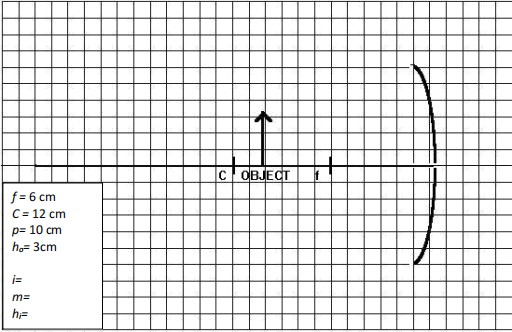
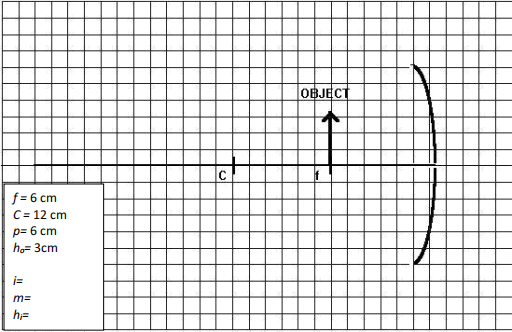
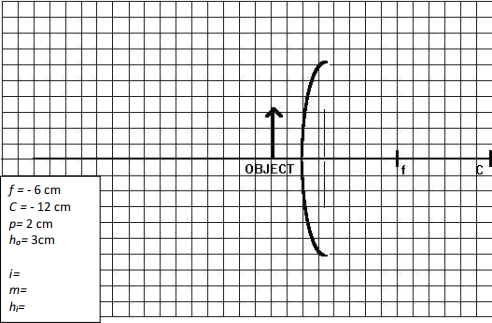
Trace at least two of the four principal rays, and show the image formed by each concave or convex mirror. Perform the mathematical calculations necessary to verify that the images in the drawings are correct (scale: 1 square = 1 cm.)
1.
2.
3.
4.
5.
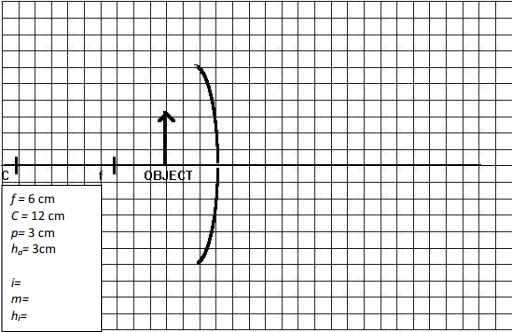
6.
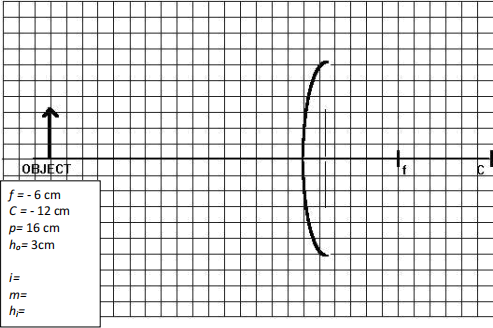
7.
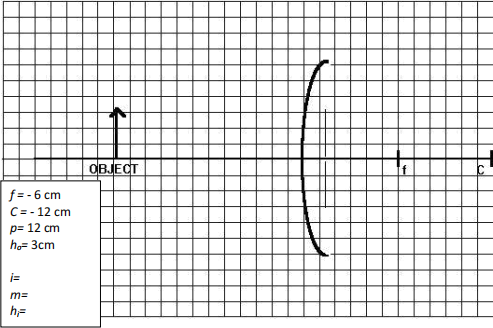
8
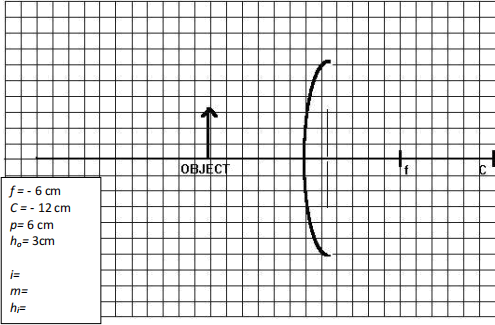
9
LENSES
Trace at least two of the four principal rays, and show the image formed by each concave or convex mirror. Perform the mathematical calculations necessary to verify that the images in the drawings are correct (scale: 1 square = 1 cm.)
10 (CONVEX!)
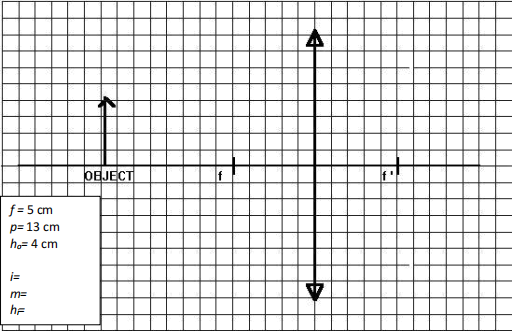
11
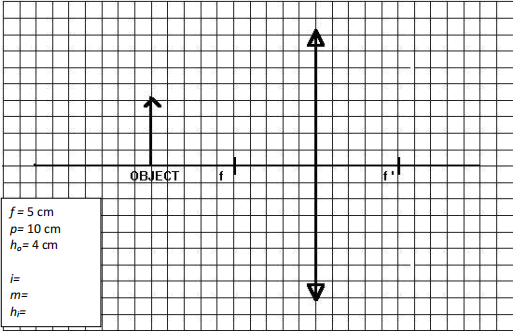
12
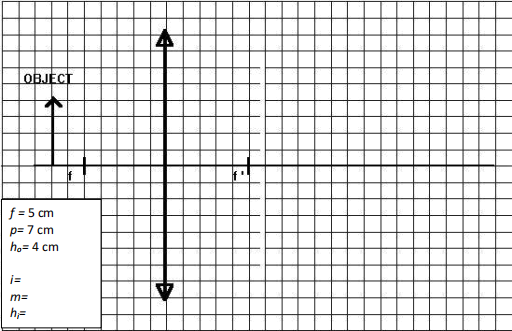
13
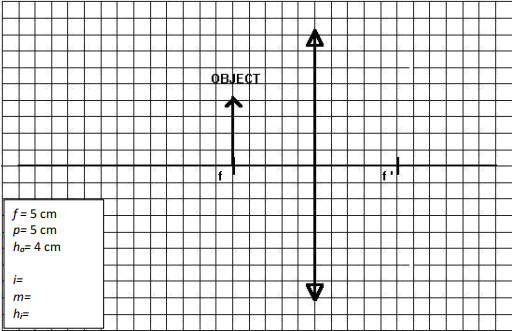
14
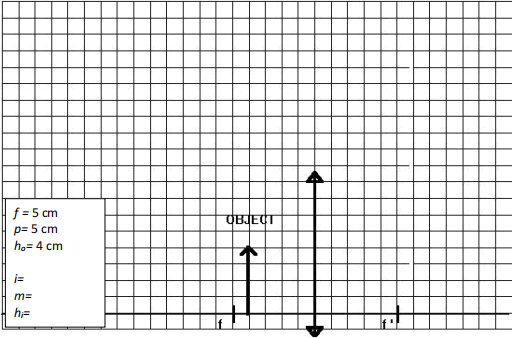
15
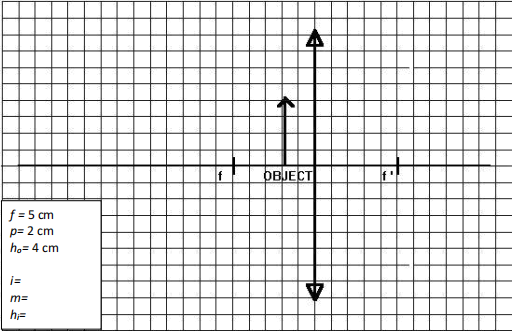
16 (CONCAVE!)
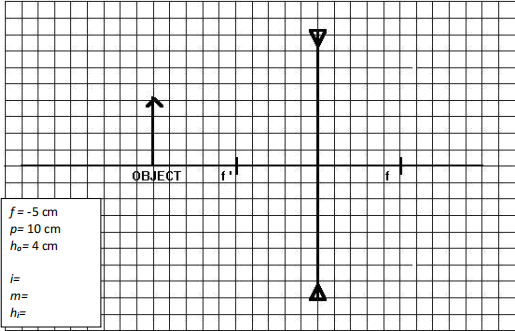
17
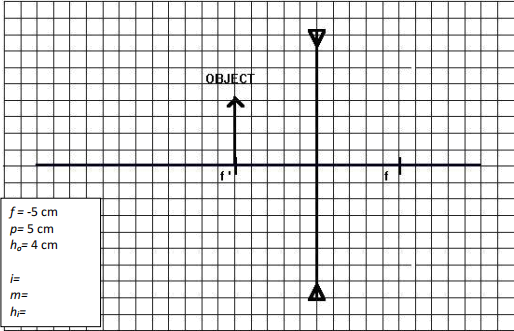
18
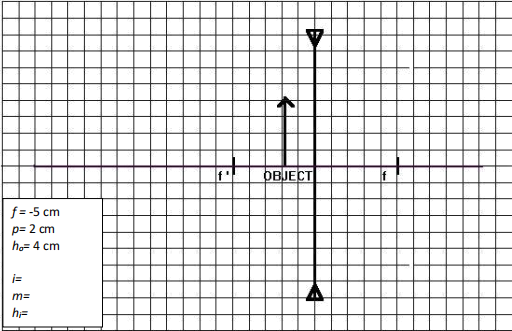
A VIRTUAL OBJECT PROBLEM
Two identical converging lenses of focal length 0.20 m are set up 0.30 m apart. An object is placed 0.30 m to the left of the left-hand lens.
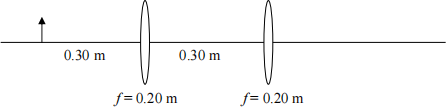
(a) Find the position, nature and magnification of the final image
(b) Repeat with a diverging lens of focal length 0.20 m in the right-hand position
Past Exam Questions
MIRRORS
TRIAL D Final Exam Question 6
A 10.0 cm long vertical object is placed 6.0 cm in front of a concave mirror. The radius of curvature of the mirror is 8.0 cm.
(a) Determine the size of the image formed by the mirror.
The mirror is replaced with a convex mirror of the same radius of curvature.
(b) Determine the size of the image formed by this mirror.
(c) What are the differences in nature (real/virtual, magnified/diminished, upright/inverted) between the images formed by the two mirrors?
LENSES
TRIAL C Final Exam Question 6
A converging beam of light is incident on a concave lens of focal length 25 mm as shown.
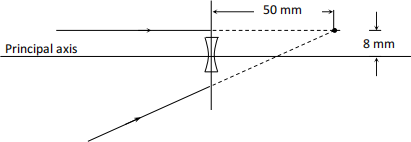
(a) Determine the distance from the lens of the image formed.
(b) Determine the distance from the principal axis of the image formed.
(c) Complete the above diagram to show the paths ofthe two rays shown through the lens.
MIRRORS and LENSES I
TRIAL A Final Exam Question 15
A converging lens of focal length 200 mm is placed 300 mm to the right of a concave mirror of radius 800 mm as shown. A small object is placed 200 mm to the right ofthe lens.
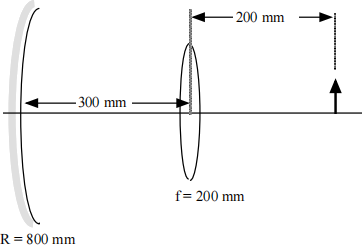
(a) What is the focal length of the mirror?
(b) Where (if anywhere) is the image formed by the lens alone?
(c) Where (if anywhere) is the image formed by the mirror from rays that have already passed through the lens?
(d) Where (if anywhere) is the final image?
MIRRORS and LENSES II
TRIAL B Final Exam Question 4
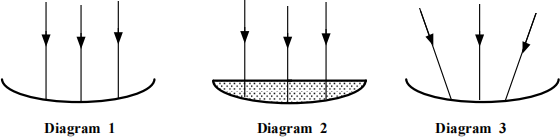
Parallel monochromatic light rays are incident to a converging mirror ofradius of curvature 1.2 m as shown on diagram 1.
(a) Complete diagram 1 to show the paths of rays after reflection and the distance of the image from the centre of the mirror.
The mirror is now filled with a liquid which has a refractive index n > 1, as shown on diagram 2.
(a) Complete diagram 2 below showing the paths of rays and position of the image. Clearly indicate the position of this image relative to the image obtained in (a).
The light source is changed and monochromatic non parallel rays are incident to the converging mirror with the liquid removed as shown on diagram 3.
(c) Complete diagram 3 below showing the path of rays and position of the image. Clearly indicate the position of this image relative to the ones obtained in (a).
MICROSCOPE
TRIAL B Final Exam Question 15
A Physics student assembles an experimental compound microscope using a 10.0 mm focal length objective lens and a 12.5 mm focal length eyepiece. The student places the two lenses 72.0 mm apart and places a 0.50 mm object 12.0 mm in front of the objective, perpendicular to the principal axis.
(a) Calculate the position of the image formed by the objective lens. Is this a real or a virtual image? Is it upright or inverted?
(b) Calculate the position of the final image which is formed by the eyepiece. What is the nature of this image? (real/virtual, upright/inverted).
(c) Calculate the magnitudes ofthe magnification of
(i) the objective lens, and
(ii) the eyepiece.
(d) What is the size of the final image?
TELESCOPE
TRIAL D Final Exam Question 16
A refracting astronomical telescope has an objective lens of focal length 700.0 mm and eyepiece of focal length 35.0 mm.
(a) Calculate the angular magnification of this telescope for most relaxed viewing.
(b) Determine the distance between the lenses.
(c) Describe the nature of the image formed by this telescope.
To convert this telescope to a terrestrial telescope an “erecting” lens of focal length 40.0 mm is inserted between the objective and the eyepiece.
(d) Calculate the new distance between the objective and the eyepiece.
(e) Describe another method which can be used to construct a telescope which produces an upright image.
2025-07-25
Curved MIRRORS